

The 1920s, often dubbed the “Roaring Twenties” or the “Jazz Age,” wasn’t just a period of unprecedented economic prosperity, social upheaval, and cultural dynamism; it was also a transformative decade for men’s fashion. Emerging from the shadow of World War I, society craved novelty, freedom, and a break from the rigid constraints of the Victorian and Edwardian eras. This spirit of change permeated every facet of life, including the way men dressed. Gone were the ultra-stiff, formal uniforms of the pre-war years, replaced by a burgeoning sense of relaxed elegance, individuality, and a distinct nod towards leisure and sport.
Men’s fashion in the 1920s laid the groundwork for modern menswear, blending sophistication with a newfound appreciation for comfort and self-expression, creating iconic looks that continue to inspire designers and vintage enthusiasts today. From the evolving silhouette of the suit to the rise of sportswear and the essential accessories that defined the era, let’s take a comprehensive journey through the defining elements of 1920s men’s style.
The Evolution of the Suit
The cornerstone of any respectable man’s wardrobe in the 1920s remained the suit, but it underwent significant changes reflecting the era’s mood. The stiff, heavily structured suits of the past gave way to softer tailoring with less padding in the shoulders, offering greater comfort and ease of movement – essential for dancing the Charleston! Early in the decade, suit jackets often featured a higher button stance and a relatively slim fit, sometimes with cutaway fronts, echoing pre-war styles but with a lighter touch.
As the decade progressed, influenced partly by the energetic rhythms of jazz music and youth culture, the “jazz suit” emerged, often featuring slightly looser cuts. Lapels, both notch and peak styles, grew progressively wider throughout the twenties, becoming a defining feature. While single-breasted jackets remained common, double-breasted styles also gained significant popularity, offering a sophisticated alternative. The overall silhouette shifted from the slimmer “Jazz Age” look of the early ’20s towards a slightly boxier, straighter shape by the mid-to-late decade.
Fabric and color choices also expanded. While wool, durable tweed (especially popular in Britain and for country wear), and flannel remained staples, lighter fabrics like linen and cotton seersucker became essential for summer months and warmer climates, particularly for “outing clothes” or vacation wear. The color palette moved beyond the somber blacks, navies, and greys of previous eras. While these classics endured, men embraced medium blues, earthy browns, olive greens, and even lighter shades like ivory, tan, and pastels, especially in summer.
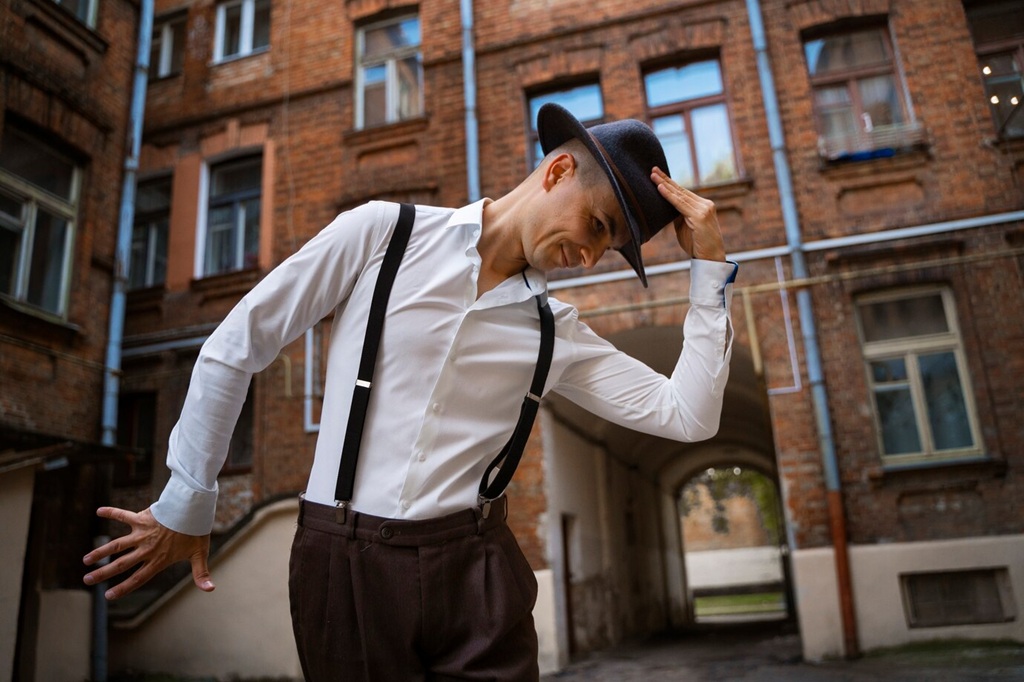
Patterns became bolder and more expressive; pinstripes (thin or thicker shadow stripes), checks, windowpanes, and large plaids added visual interest and personality. Trousers were a key element of the 1920s silhouette – they were typically high-waisted, designed to be worn with suspenders (braces), and featured wider legs than in previous decades. Cuffs (turn-ups) became standard, and pleats at the waist (often twin pleats) added volume and comfort. Towards the end of the decade, the extremely wide-legged “Oxford bags,” initially a rebellious student trend, briefly influenced mainstream trouser widths.
Shirts, Collars, and Ties
Beneath the jacket, the shirt also evolved. While detachable collars, often heavily starched, were still widely worn, especially by older or more conservative men, the softer, attached collar gained significant ground, particularly among the younger generation. These attached collars came in various styles, including the classic pointed shape, the rounded “club” collar, and the longer “spearpoint” collar designed to showcase the tie knot. Collar pins or bars were often used with softer collars to keep them neatly in place and elevate the tie slightly. Shirt fabrics prioritized comfort, with cotton and linen being common choices. While white remained a staple, especially for formal occasions, shirts embraced color and pattern. Stripes were incredibly popular, often paired with solid ties, but subtle checks and even pastel shades like pink, yellow, or light blue injected personality into daily wear. French cuffs requiring cufflinks were common for dressier shirts, adding a touch of refinement.
Neckwear was an essential element for expressing personal style. Bow ties were standard for formal evening wear (black for tuxedos, white for tailcoats) but were also worn during the day. Neckties, however, became the dominant choice for daily business and social wear. Ties were generally narrower than today’s standards and often featured bold patterns – geometric Art Deco designs, vibrant stripes, polka dots, and paisley prints were all popular.
Silk was a preferred material for its luxurious feel and ability to showcase vibrant colors and patterns, though wool and rayon ties were also common. Tie pins and clips helped keep the neckwear perfectly in place. Pocket squares, folded neatly (often in a simple puff or straight edge fold) in the jacket’s breast pocket, added another opportunity for a dash of color or pattern, often complementing the tie. Popular colors for accessories like ties and pocket squares included bright reds, greens, and browns, offering a contrast to the suit fabric.
Casual and Leisure Wear
One of the most significant developments in 1920s men’s fashion was the rise of sportswear and its influence on casual attire. While the concept of “casual wear” as we know it today didn’t quite exist (men rarely left the house without a jacket and tie unless engaging in manual labor), clothing designed for sports and leisure activities became increasingly acceptable for informal occasions. Golf attire was particularly influential: plus-fours (baggy knickerbockers ending four inches below the knee) or shorter knickers became iconic, often paired with patterned knee-high socks (argyle was a favorite), a dress shirt, tie, and a V-neck sweater or cardigan. Fair Isle patterned sweaters, popularized by the Prince of Wales, became incredibly fashionable. Cardigans, sometimes collarless or featuring shawl collars, offered a comfortable layering option.
Beyond specific sportswear, other relaxed styles emerged. The Norfolk jacket, a belted tweed jacket traditionally for hunting, remained popular for country wear and informal settings. Trousers worn casually might include flannel slacks or the aforementioned Oxford bags, often paired with a sports jacket in a contrasting color or pattern (like a navy blazer with white flannel trousers – a classic collegiate and yachting look). The “collegiate” or “Ivy League” style significantly influenced younger men’s fashion, promoting a more relaxed but still put-together aesthetic. This included items like striped boating blazers, V-neck tennis sweaters (often white with colored trim), and more comfortable footwear. Even for casual occasions, however, a certain level of formality often remained – shirts were typically worn with ties, even under sweaters.
Outerwear Essentials
To brave the elements, men relied on a range of overcoats and jackets. For formal and business occasions, long wool overcoats were standard. The Chesterfield, single or double-breasted with a velvet collar, remained a sophisticated choice. The Ulster coat, a heavy double-breasted coat often featuring a belt or half-belt, provided warmth in colder weather. Trench coats, a practical carryover from their military use in WWI, became a stylish and functional option for rainy weather. These coats were typically tailored, often reaching below the knee, and came in classic colors like black, navy, grey, and camel.
For less formal occasions or milder weather, shorter jackets and varied raincoat styles were available. Leather jackets gained popularity, associated with motoring and aviation adventures. Flannel or tweed jackets, similar in style to lumberjack jackets with ribbed waistbands, offered a rugged, casual look that bridged the gap between sportswear and workwear. As the decade progressed, outerwear, like suits, generally trended towards slightly looser fits, prioritizing practicality alongside style.
Footwear Fundamentals
A gentleman’s look was incomplete without the right shoes. Oxfords remained the dominant choice for business and formal wear, characterized by their closed lacing system. Black patent leather Oxfords were reserved for evening wear (tuxedos and tailcoats). For daytime, brown and black leather Oxfords were standard. Brogues, essentially Oxfords with decorative perforations (broguing), gained immense popularity, adding a touch of flair suitable for both city and country wear. Perhaps the most iconic shoe style of the Roaring Twenties was the spectator shoe – a two-tone Oxford, typically combining white with black or brown leather, particularly favored during summer months and associated with leisure and sporting events.
While boots were still worn, especially in the earlier part of the decade or for specific activities, lower-cut shoes became increasingly prevalent. Loafers began to emerge as a more casual slip-on option towards the end of the decade. For the upper classes or those aiming for a particularly dapper look, spats – fabric coverings worn over the shoes, usually in white, grey, or fawn – were still seen, though their popularity began to wane. Canvas shoes with rubber soles gained traction for sports like tennis and became associated with the burgeoning casual and collegiate styles.
Headwear and Accessories
No man in the 1920s would consider his outfit complete without a hat. Headwear was ubiquitous and varied depending on the occasion, season, and social class. For city and business wear, the soft felt fedora, with its distinctive creased crown and pliable brim, became increasingly dominant, overtaking the stiffer Homburg and bowler hat (derby) in popularity, though these more formal styles were still worn. Fedoras typically had slightly higher crowns and narrower brims than later versions. During summer months, straw hats were essential: the stiff, flat-topped boater hat with a striped ribbon was perfect for leisurely pursuits, while the softer, wider-brimmed Panama hat offered stylish sun protection. For working-class men and for casual or country wear, the flat cap (including the fuller, rounded newsboy or baker boy style) made of tweed, wool, or cotton was the go-to choice.
Beyond hats, numerous accessories added the finishing touches. Suspenders (braces) were standard for holding up high-waisted trousers – belts were gaining popularity but weren’t yet universal, especially with suits. Cufflinks were necessary for shirts with French cuffs, often made from precious metals or featuring subtle designs. While pocket watches attached to chains (often Albert chains clipped to a waistcoat or belt loop) were still common, the wristwatch rapidly gained favor for its convenience. Gloves were essential – leather or chamois for daywear (in colors like grey, tan, or brown) and white kid leather or fabric gloves for formal evenings. Walking canes were less common than in previous decades but still carried by some gentlemen as a fashion statement. Collar pins, pocket squares, and tasteful neckwear completed the carefully curated look of the 1920s man.
Grooming and Hairstyles
The overall aesthetic emphasized neatness and being well-presented. The clean-shaven look was overwhelmingly dominant; mustaches were less common than in previous eras, and beards were rare among fashionable men. Hairstyles were generally short, neat, and meticulously groomed. Hair was typically parted sharply on the side or slicked straight back using pomade or hair brilliantine to achieve a sleek, shiny, controlled look. Sideburns were kept short and tidy. This emphasis on sharp grooming complemented the tailored clothing and polished accessories, contributing to the era’s overall image of sophistication and modernity.
Related: Unlocking Your Best Hair: What to Expect During a Hair Texture Consultation
Influences on 1920s Men’s Fashion
Several key factors converged to shape the distinct style of the Roaring Twenties. The collective sigh of relief and wave of optimism following the end of World War I created a desire to shed the austerity and rigidity of the past. Economic prosperity, particularly in the United States before the 1929 crash, meant more disposable income for many, allowing greater investment in clothing and fostering a market for new styles and trends. Breaking old rules and embracing the new was part of the post-war zeitgeist.
The cultural explosion known as the Jazz Age was perhaps the most significant influence. The energetic rhythms of jazz music, the popularity of dancing, the rise of speakeasies during Prohibition, and a burgeoning youth culture all fueled a desire for clothing that was less restrictive and more expressive. Looser fits allowed for greater movement on the dance floor, while brighter colors and bolder patterns reflected the era’s vibrant energy. University students (the “Ivy League” influence) also played a role, popularizing more relaxed styles like sports jackets, soft collars, and casual trousers like Oxford bags.
Finally, the burgeoning influence of Hollywood and international style icons played a crucial role. Silent film stars like the suave Rudolph Valentino (popularizing elegant evening wear) and the athletic Douglas Fairbanks became male ideals whose on-screen and off-screen styles were widely emulated. Perhaps the single most influential figure, however, was Edward, the Prince of Wales (later Edward VIII). His penchant for comfortable, slightly unconventional attire – including Fair Isle sweaters, plus-fours, tweed suits, soft collars, and suede shoes – set international trends and pushed menswear towards a more relaxed, modern direction. He championed a blend of traditional tailoring with sporting comfort that perfectly captured the spirit of the age.
Related: The Ultimate Guide To Choosing The Best Cowboy Boots: Ride in Style and Comfort
People Also Ask (FAQs)
Q1: What defined men’s fashion in the 1920s?
A: 1920s men’s fashion was defined by a transition from post-WWI formality towards more relaxed elegance and comfort. Key elements included softer-shouldered suits (often three-piece) with wider lapels and high-waisted, wider-legged trousers; the increasing popularity of attached soft collars on shirts; bold patterns in ties and sweaters (like Fair Isle and argyle); the essential nature of hats like fedoras, boaters, and flat caps; and the rise of sportswear (like plus-fours and knickerbockers) influencing casual attire. It was sophisticated yet embraced novelty and comfort.
Q2: Did men wear jeans in the 1920s?
A: Yes, but not as fashion or casual wear. Denim blue jeans existed in the 1920s primarily as durable workwear for laborers, farmers, and miners. They were rugged trousers, often worn as overalls, and were not considered acceptable attire for social or leisure occasions by most men, especially in middle and upper classes. The idea of jeans as mainstream casual wear wouldn’t emerge until decades later.
Q3: What kind of hats did men wear in the 1920s?
A: Hats were an indispensable part of a man’s outfit. Popular styles included the felt fedora (increasingly dominant for city wear), the more formal Homburg and bowler hats, straw boaters and Panama hats for summer and leisure, and tweed or wool flat caps (including newsboy/baker boy styles) for working-class or casual country wear. The specific hat chosen depended on the occasion, season, and social context.
Q4: What were popular suit styles for men in the 1920s?
A: Popular suit styles included single and double-breasted jackets, often cut slightly longer early in the decade and becoming a bit boxier later. Lapels (notch or peak) grew wider as the decade progressed. Three-piece suits (jacket, waistcoat/vest, trousers) were very common. Fabrics like wool, tweed, and flannel were used, with patterns like pinstripes, checks, and plaids being fashionable. Trousers were high-waisted with wide legs and cuffs. The overall trend moved towards a less structured, more comfortable fit than previous eras.
Q5: How did the Jazz Age influence men’s fashion?
A: The Jazz Age brought a spirit of energy, rebellion, and modernity that significantly influenced men’s fashion. The need for freedom of movement for dancing encouraged looser-fitting suits and trousers (“jazz suits,” Oxford bags). The vibrant, syncopated rhythms found echoes in bolder patterns and brighter colors used in ties, sweaters, and sometimes even suits. The overall atmosphere of youthful exuberance and breaking conventions encouraged men to experiment more with style and embrace less formal, more comfortable clothing options, reflecting the dynamic culture of the era.
Conclusion
Men’s fashion in the 1920s represents a fascinating pivot point in the history of menswear. It was a decade that skillfully blended lingering Edwardian elegance with a distinctly modern desire for comfort, practicality, and self-expression. Driven by post-war optimism, economic change, the pulsating energy of the Jazz Age, and influential style icons, men shed the stiff constraints of the past for softer tailoring, bolder patterns, and a newfound appreciation for leisurewear. The iconic silhouettes – the high-waisted trousers, the progressively wider lapels, the essential fedora or boater hat, the patterned knitwear, and the unmistakable charm of two-tone shoes – created a look that was both dapper and dynamic. More than just clothing, 1920s men’s fashion reflected a world in transition, laying down many of the foundations of the modern male wardrobe while leaving behind a legacy of timeless style that continues to captivate and inspire nearly a century later.